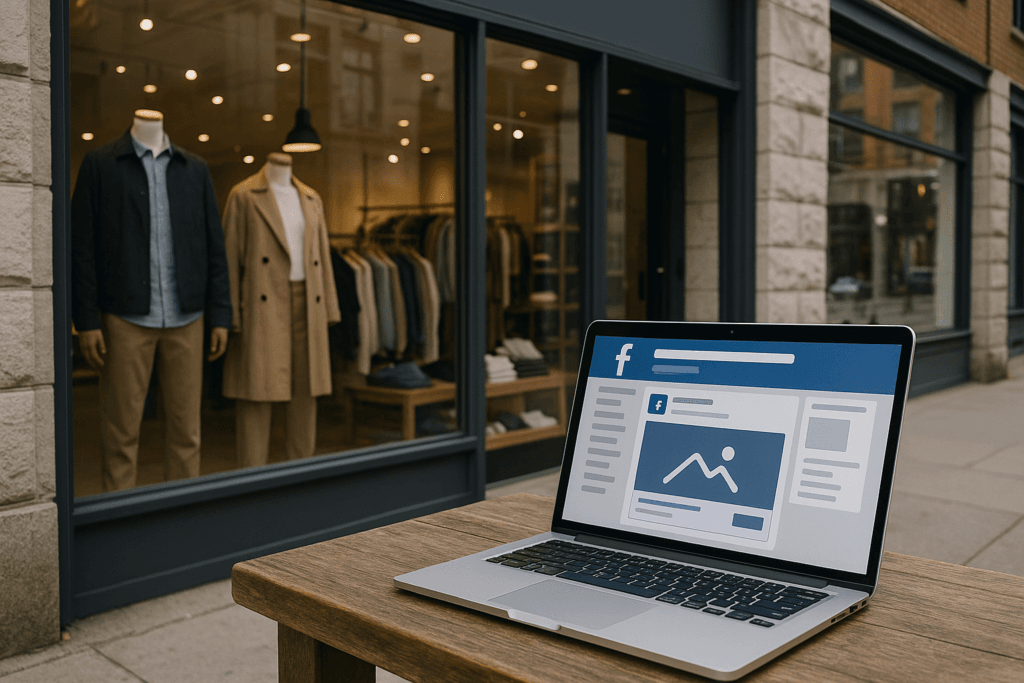
Picture someone on the subway between St. George and Bloor, thumb moving fast, half-watching their screen. That three-second window is where your online store lives or dies. Getting Facebook ads ecommerce Toronto results isn’t about clever slogans or a bigger budget. It’s about showing the right product to the right person before their thumb keeps moving. This is part of our broader guide on How Small Businesses Turn Ad Spend Into Leads. For the full overview, see How Small Businesses Turn Ad Spend Into Leads.
I’ve sat with a lot of store owners in this city. The ones who ship candles from Leslieville, the ones selling handmade leather bags out of a Junction studio, the ones running a supplement brand from a Mississauga warehouse. Most of them have the same story. They boosted a few posts, saw some likes, and never figured out if any of it made money. That gap between activity and actual sales is what we’re going to close here.
Why Facebook Still Works for Toronto Online Stores
People love to declare Facebook dead every year. Meanwhile the platform quietly keeps moving more product than almost anything else for small stores. The reason is simple. Google captures people who already know what they want. Facebook and Instagram catch people before they know they want it. For an e-commerce brand, that’s gold, because most of what you sell isn’t something people wake up searching for.
Think about a jewellery maker in Riverdale. Nobody types “hand-hammered brass earrings” into Google at 9pm on a Tuesday. But show them a fifteen-second video of those earrings catching the light, and suddenly they want a pair. That’s the difference. Search advertising is demand capture. Social advertising is demand creation. If you sell products people discover rather than search for, this is your channel.
That distinction matters when you’re deciding where your dollars go. Service businesses often lean harder on search, and we cover that split in our piece on what service businesses need to know before spending on Google Ads. But for physical products with strong visuals, Facebook and Instagram usually carry the load.
The Contrarian Truth About Your Ad Creative
Here’s what most agencies won’t tell you. Your targeting barely matters anymore. Meta’s algorithm has gotten so good at finding buyers that obsessing over audience settings is largely wasted effort. The lever that actually moves your numbers is the creative itself. The video, the image, the first line of copy. That’s where 80 percent of your results are decided.
I watched a skincare brand in the Beaches prove this the hard way. They spent weeks fine-tuning audience layers, interest stacks, lookalike percentages. Sales stayed flat. Then they scrapped the polished studio photos and shot ugly, honest phone videos of the founder using the product at her bathroom sink. Same targeting. Sales tripled in six weeks. The algorithm didn’t change. The creative did.
So stop tweaking audiences. Start making more ads. The store owners who win are the ones producing five, ten, fifteen pieces of creative a month and letting the platform pick winners. It feels backwards if you came up in the old days of precise targeting. But it’s how the machine works now.
What Good Facebook Ads Ecommerce Toronto Campaigns Are Built On
A campaign that actually turns spend into sales has a shape to it. It isn’t one ad blasting at everyone. It’s a sequence that matches how people actually buy. Someone sees you, gets curious, comes back, and eventually buys. Your ad structure should mirror that journey rather than fight it.
Here’s a simple framework I hand store owners. Three stages, clear jobs for each:
- Cold (discovery): 60 to 70 percent of budget. Video and image ads showing the product to people who’ve never heard of you. Goal is a click or a first visit.
- Warm (retargeting): 20 to 30 percent of budget. Ads shown to people who visited but didn’t buy. Reminders, reviews, a reason to come back.
- Hot (recovery): 5 to 10 percent of budget. Abandoned cart and past-buyer ads. Often the cheapest sales you’ll ever make.
Most struggling stores put everything into the cold stage and wonder why money leaks out. The warm and hot layers are where profit hides. A visitor who added to cart and left is worth chasing hard. They already told you they wanted it. Getting a well-built retargeting engine running is exactly the kind of work our digital marketing team handles for growing stores when owners are too buried to build it themselves.
Real Stores, Real Numbers
Let me give you three that stuck with me, because theory only goes so far.
Situation: A home goods shop in Etobicoke was spending $40 a day boosting posts with nothing to show. Action: We killed the boosts, built proper cold and retargeting campaigns, and shot simple room-styling videos on a phone. Outcome: Return on ad spend went from unmeasurable to roughly 3.8x within about ten weeks, and they scaled to $120 a day because the math finally worked.
A supplement brand out of Brampton had the opposite problem. Plenty of sales, but the cost to get each one kept climbing. They were leaning entirely on cold traffic. We built an abandoned-cart sequence and a past-buyer campaign for their reorder cycle. Their blended cost per purchase dropped about a third in two months, and repeat orders became a real revenue line instead of an accident.
The third one is a clothing boutique in the Junction. They had beautiful product photos and terrible sales. The fix wasn’t more spend. It was creative variety. We moved them from two static images a month to twelve pieces of mixed video and image content. Nothing else changed in the account. Sales climbed steadily and cost per click fell about 40 percent over the quarter, simply because fresh creative kept the algorithm fed.
Getting Your Pixel and Tracking Right
None of this works if you can’t see what’s happening. Before you spend a dollar, your Meta Pixel and Conversions API need to be firing correctly. This is the plumbing. It’s boring and it’s non-negotiable. If Meta can’t see which ads lead to sales, it can’t optimize, and you’re flying blind while paying full price.
Shopify makes this reasonably painless through its native Meta integration, and their Shopify guide to connecting Facebook and Instagram walks you through it step by step. If you’re on another platform, budget an afternoon or a developer to get it right. Verify events are firing before launch. I’ve seen stores burn thousands because their purchase event never tracked and they thought the ads simply didn’t work.
Once tracking is solid, watch three numbers above all others. Cost per purchase, return on ad spend, and add-to-cart rate. Everything else is noise in the early weeks. Meta’s own Meta Business Help Centre is worth bookmarking for the technical setup questions that always come up.
When Facebook Ads Are the Wrong Move
I’d be lying if I said this channel fits everyone. If your product costs $8 and your margin is a couple of dollars, the math rarely works. Ad costs will eat you alive before you cover acquisition. Facebook advertising favours products with enough margin to absorb a $15 to $30 customer acquisition cost and still profit.
It also struggles when there’s nothing visual to show. If your product is genuinely boring to look at or purely functional, search intent may serve you better. And if you’re a local service rather than a shipping store, your playbook looks completely different. A landscaper, for instance, needs a local-lead approach we lay out in our guide on how to get landscaping clients, not a national e-commerce funnel. Know which game you’re playing.
There’s also a patience factor people underestimate. Meta’s algorithm needs data to learn. The first two weeks of any campaign look rough while it’s gathering signals. Owners who panic and shut things down on day four never give the system a chance. Budget for a learning period. Expect the first fortnight to be ugly before it settles.
Where to Start With Facebook Ads Ecommerce Toronto Campaigns
Don’t try to build everything at once. Start narrow and expand as you learn. Here’s the sequence I’d give a store owner launching this week:
- Install and verify your Meta Pixel and Conversions API. Confirm the purchase event fires on a test order.
- Shoot three to five simple videos on your phone. Product in use, not glossy ads. Real beats polished.
- Launch one cold campaign with a modest daily budget, say $20 to $30, targeting broad with those videos.
- Build a retargeting campaign for site visitors once you have traffic flowing in.
- Add an abandoned-cart sequence. This is often your best-performing ad by far.
- Let it run two full weeks before judging anything. Then cut losers, scale winners, add fresh creative.
That’s it. No secret targeting hacks, no thousand-dollar course. Good creative, clean tracking, a sensible funnel, and the patience to let it learn. The stores that follow this pattern tend to find their footing within a month or two. The ones chasing shortcuts stay stuck boosting posts forever.
Strong ads also lean on a website that converts once the click lands. If your product pages are slow or confusing, no amount of ad spend saves you, which is where good branding and web strategy earns its keep alongside the ads.
Bringing It Together
Running profitable Facebook ads ecommerce Toronto campaigns comes down to a few unglamorous truths. Feed the algorithm fresh creative. Track your sales honestly. Build a funnel that follows how people actually buy. Give it time to learn before you judge it. Do those four things and this channel can carry a serious chunk of your revenue. For the wider picture, see our full guide on How Small Businesses Turn Ad Spend Into Leads.
If you’ve been boosting posts with nothing to show for it, that’s a signal, not a verdict. The channel works. The setup was just missing pieces. When you’re ready to have someone map out what your store actually needs, book a conversation with our team and we’ll look at your numbers together.