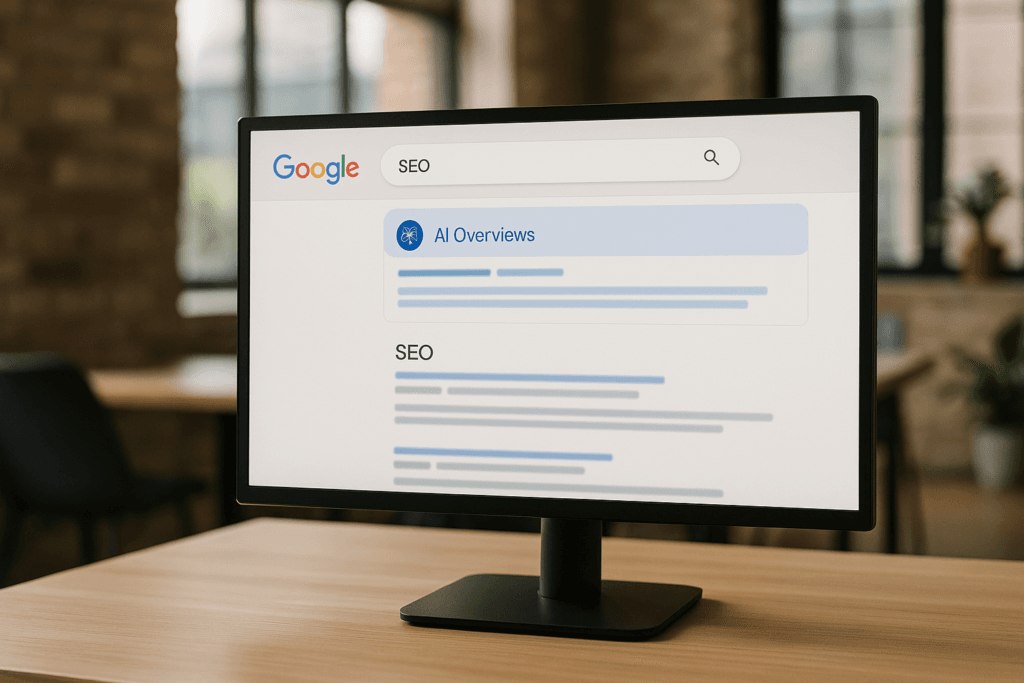
Type almost any question into Google today and something new sits at the top. Before the blue links, before the ads, there’s a paragraph of AI-generated answer pulling from several sites at once. That box is called an AI Overview, and it’s quietly rewriting how customers find local businesses. If you want your name inside it, you need to understand Google AI Overviews SEO and how it differs from the old game of chasing rankings. This is part of our broader guide on The Small Business Guide to Ranking on Google in Canada. For the full overview, see The Small Business Guide to Ranking on Google in Canada.
I’ve watched this shift land on real Toronto businesses over the past year. Some panicked. Others shrugged. The ones paying attention noticed their traffic patterns changing before their competitors did. Let me walk you through what’s actually happening and what you can do about it without hiring a data science team.
What Google AI Overviews SEO Actually Means for a Small Business
An AI Overview is Google’s attempt to answer a question directly, in its own words, using content it trusts. It stitches together information from multiple pages and presents a tidy summary. Underneath, it usually cites the sources it pulled from. Those citations are the new prize. Getting your site named in that summary is the whole point of Google AI Overviews SEO.
Here’s what surprises most owners. The Overview doesn’t always favour the page ranking first. I’ve seen a site sitting in position six get cited while the number one result got ignored. Google is choosing clarity over raw authority in a lot of cases. If your page answers the exact question cleanly, you have a shot even against bigger competitors. That’s genuinely good news for smaller players who write well.
Why the Old Rules Still Matter More Than the Hype Suggests
Every few months a new tool arrives and someone declares SEO dead. It isn’t. The AI pulls from pages that already earn trust through solid content, real reviews, and clear structure. If your foundation is weak, no clever trick gets you into the Overview. Think of it like a job reference. Google only quotes sources it already believes.
This is where I push back on a common belief. A lot of people assume you need to write specifically for the AI, packing pages with question-and-answer blocks and schema markup. That helps a little. But the businesses winning at this aren’t gaming the format. They’re the ones who wrote genuinely useful, specific content in the first place. The AI just found them. Good content was always the moat, and it still is.
The Kind of Content Google’s AI Actually Quotes
After looking at dozens of Overviews across local searches, a pattern shows up. The cited pages tend to share a few traits. They answer one clear question per section. They use plain language a customer would recognize. And they include specifics like prices, timeframes, or steps rather than vague reassurance.
Here’s a short checklist you can run against any page on your site right now:
- Does a single H2 or paragraph answer one real customer question directly?
- Is the answer given in the first two sentences, before the fluff?
- Are there concrete details: numbers, locations, timeframes, costs?
- Would a stranger understand it without knowing your industry?
- Does the page show trust signals like reviews, credentials, or years in business?
If you can tick four of those five on a page, you’re already ahead of most local competitors. The gap between businesses here is smaller than you think.
Real Examples of Google AI Overviews SEO Working Locally
A plumbing company in Etobicoke was stuck. They ranked decently but got skipped by the new AI summaries for searches like “why is my drain gurgling.” Their pages were sales-heavy and thin on real answers. We rewrote their service content to answer specific questions first, then offer the service. Within about three months, they started appearing in Overviews for six common problem searches. Their organic calls climbed roughly forty percent over that stretch. Much of that came from the deeper structural work we covered in our piece on growing a plumbing business in Toronto.
A skincare studio in Leslieville had a different problem. They were invisible for treatment-related questions. Customers searching “how long does microneedling recovery take” saw competitors quoted instead. We built a small library of honest, detailed answer pages, no exaggeration, just facts a client would want. Four months later they held citations for several treatment queries. Consultation bookings rose by about a third. The lesson stuck: specificity beats polish.
Then there’s a used car dealership out in Brampton. They assumed AI Overviews only mattered for informational searches, not buyers. Wrong. Someone searching “is it worth buying a certified pre-owned car in Ontario” is halfway to a purchase. We produced a straight-talking guide answering exactly that. It got cited, and that page now feeds a steady trickle of qualified walk-ins. Roughly one in eight of their monthly leads traces back to it.
How to Structure a Page So the AI Can Read It
The mechanics aren’t complicated once you see them. Lead with the answer. Google’s AI wants the payoff up front, not buried three paragraphs down. Use descriptive headings that mirror how people actually ask questions. Break long explanations into short, scannable chunks with clear subheadings.
Structured data helps the machine understand your content, though it isn’t magic. Google’s own documentation on structured data is worth a look if you handle your own site. See Google’s guide to structured data markup for the technical side. That said, don’t obsess over schema before your writing is clear. Markup on weak content is lipstick on a fence post. Fix the words first.
Medical and health-related businesses face an extra layer here, since Google holds those pages to a higher trust standard. If that’s your world, the same principles apply but the credibility bar is steeper. We broke this down in detail in our look at why so many Toronto medical clinics stay invisible online. The short version: accuracy and author credentials matter more than clever formatting.
When Chasing AI Overviews Is the Wrong Move
I won’t pretend this applies to everyone. Some businesses shouldn’t spend much energy here at all. If your customers find you through referrals, repeat visits, or a strong local reputation, AI Overviews are a minor factor. A neighbourhood barber in the Junction with a booked-out chair doesn’t need to win informational searches. Their business runs on word of mouth and a good haircut.
There’s also a real risk worth naming. AI Overviews can answer a question so completely that nobody clicks through. This is the zero-click problem. For purely informational queries, you might get cited and still see no traffic. That’s why I steer clients toward questions that lead somewhere, questions a buyer asks right before they call or book. Chasing trivia that ends in the Overview is a waste. Answer the questions that move someone toward a decision.
A Simple Sequence to Start With
You don’t need a full overhaul to begin. Start with the questions your customers actually ask you on the phone. Write those down over a week. Those are your highest-value targets because they carry buying intent. Build one clear, honest answer page for each, leading with the answer and backing it with specifics.
Then check your existing pages against the five-point checklist above. Rewrite the intros so the answer comes first. Add the concrete details you left out. This kind of steady, unglamorous work is exactly what solid Google AI Overviews SEO looks like in practice. There’s no shortcut, but there’s also no mystery. If you’d rather hand this off, our team handles this as part of our broader digital marketing services for local businesses.
It’s also worth remembering that this trend sits inside a bigger movement. Search is getting more conversational, and so is how customers expect to be served. If you want to think about where this is all heading, our work on AI-powered marketing for small businesses connects the dots between these Overviews and the wider shift. The businesses that adapt early tend to hold their ground longest.
Measuring Whether It’s Working
Tracking Overview appearances isn’t as clean as tracking rankings, but you can still watch the signals. Keep an eye on impressions in Google Search Console for question-style queries. Watch whether your click-through rate holds steady even as impressions rise. And do the simple thing: search your target questions yourself and see who’s cited. Set a monthly reminder to check your top ten questions. Progress here is slow and lumpy, not a straight line. Give it a quarter before you judge results. Most owners quit right before the momentum kicks in.
Where to Take Google AI Overviews SEO From Here
None of this requires magic. It requires answering real questions honestly, clearly, and before your competitors do. That’s the whole discipline behind Google AI Overviews SEO, stripped of jargon. Start with the questions your phone brings you every week. Fix your best pages first. Let the wins compound. For the wider picture, see our full guide on The Small Business Guide to Ranking on Google in Canada.
Curious whether your site is getting picked up in these AI answers, or getting quietly passed over? Send us the three questions your customers ask most, and we’ll tell you where you stand. You can reach us through our contact page for a straight answer on your visibility.